Golden Text
“And so were the churches established in the faith, and increased in number daily.” (Acts 16:5, KJV) · Read in the Bible
In Philippi, the monument-city to the dream of uniting the world by force, God united humanity by grace: a wealthy businesswoman, a possessed slave girl, and a jailer — the top, the bottom, and the middle of society — seated as brothers and sisters in the first church in Europe.
In this lesson, the story of the Gospel sets foot on European soil for the first time. And the place chosen by God bears a name that almost no one notices: Philippi, named in honor of Philip of Macedon — the father of Alexander the Great, the man who dreamed of uniting humanity under a single empire and almost succeeded, at the point of the sword.
Philippi was a living monument to the human attempt to unite the world by force. And it is right there that God decides to truly unite humanity — not by conquest, but by grace. Look at whom God saves in Philippi: a wealthy businesswoman, a possessed slave girl, and a jailer. The top, the bottom, and the middle of society. An Asian woman, a Greek woman, and a Roman man. People whom Rome would never seat at the same table — and whom grace seated in the same church.
The thesis of the lesson: the citizenship that Rome sold, grace gives for free. And it crosses three walls: a closed heart, deep-rooted darkness, and locked doors.
The ramp (Acts 16:1-10) — how the Gospel reached the riverside
The pair is formed — and a knife that confuses everyone
Paul now walks with Silas. In Lystra he meets Timothy, the son of a believing Jewish mother and a Greek father. And he does something that seems to contradict the entire previous chapter: he circumcises Timothy (v. 3). Wait — didn't the Council just decide that circumcision is not necessary?
It is not a contradiction — it is one of the most mature lessons in Scripture on the difference between the essential and the strategic. Paul does not circumcise Timothy to save him (that would deny the Gospel); he circumcises him so that the young man's half-Greek origin will not close the door of the synagogues where they needed to preach. With Titus, when they tried to impose circumcision as a requirement of the Gospel, Paul flatly refused (Galatians 2:3-5). The same knife: refused when it touches salvation, accepted when it serves the mission. In what is essential, Paul is made of iron; in what is strategic, he is made of water. Many Christians invert this: they are made of water in doctrine and of iron in preferences.
The Spirit who closes doors — and the vision at Troas
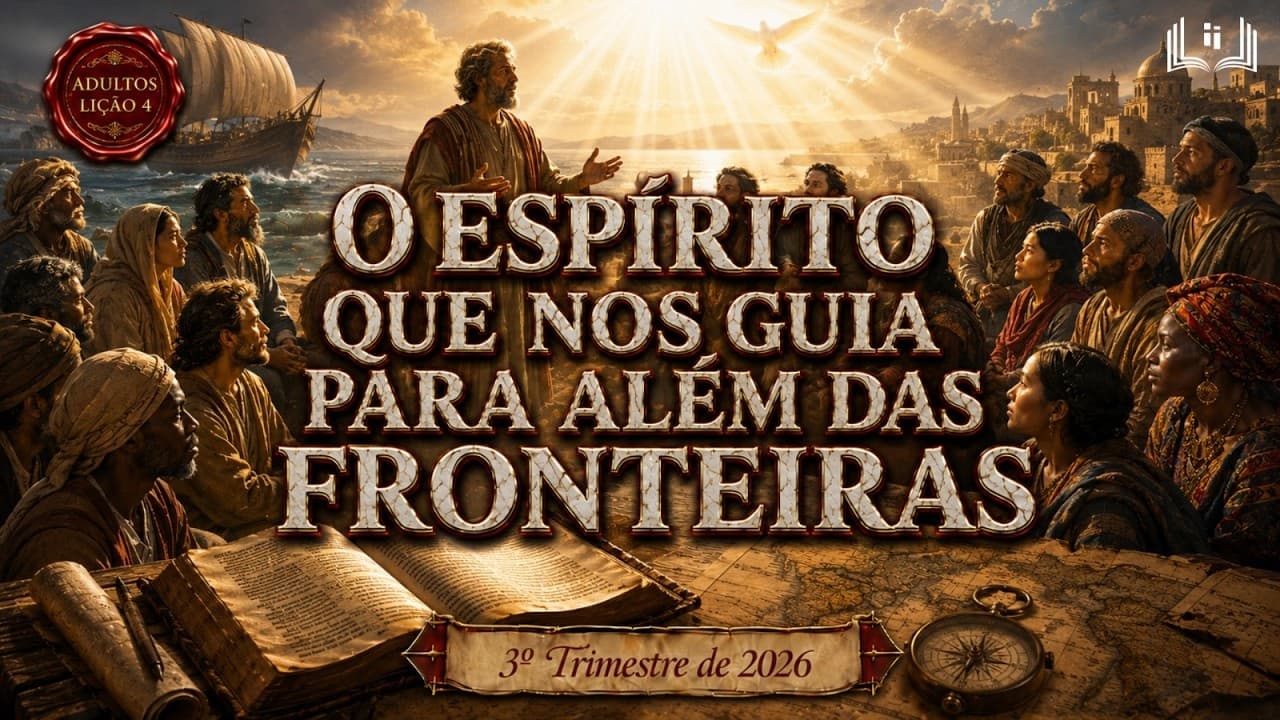
Then the strangest thing happens. Paul tries to preach in Asia — the Spirit forbids him. He tries Bithynia — the Spirit of Jesus does not permit it (vv. 6-7). Two doors slammed in the face of the greatest missionary in history — not because of sin, not because of error, but because God had another place. In Troas, at night, the vision: a man of Macedonia pleading with him to cross over to Macedonia and help them (v. 9).
Hold on to this truth, which comforts and corrects at the same time: sometimes God's greatest direction comes in the form of a closed door. Paul wanted Asia; God wanted Europe. If Asia had worked out at that moment, Philippi would never have heard the Gospel — and the letter to the Philippians would never have been written. The closed door was not rejection; it was redirection.
And a detail for the attentive reader: from v. 10 onward, the narrative shifts from third person to first person plural — we — as they sought to depart for Macedonia. Luke, the author, joins the team right here. The account of Philippi is an eyewitness testimony.
The Closed Heart (Acts 16:11-15) — Lydia, the top of the pyramid
A city without a synagogue and a gathering of women
In Philippi, there is no synagogue — according to Jewish tradition, ten men who were heads of households were required, and the colony of Roman veterans barely had any Jews. So, on the Sabbath, Paul goes to the riverside, where some women used to gather to pray. The apostle who preached to crowds and proconsuls begins the evangelization of Europe sitting on the bank of a river, talking with a handful of women. God does not despise small beginnings.
🏛 Archaeology — purple dye and the price of status. Lydia sold purple, the most expensive dye of antiquity, extracted drop by drop from the murex — thousands of mollusks to dye a single robe. It was the color of emperors and senators, forbidden by law to the common people. Selling purple meant selling the very symbol of Rome's power. Lydia was a high-end businesswoman, with a house large enough to host the missionary team and, later, the entire church. She traded in the status that money buys — and God gave her, for free, the only citizenship that money cannot buy.
The verb that decides salvation — the Lord opened her heart
Notice the subject of the sentence in Acts 16:14: it does not say that Lydia opened her heart — it says that the Lord opened her heart. The Greek verb is διανοίγω (dianoígō): to open completely, to throw wide open what was locked. It is the same word used at Emmaus, when the Risen One opened the disciples' understanding (Luke 24:45) and their hearts burned while He opened the Scriptures (Luke 24:32). The same God who opens Scripture opens the heart — Paul spoke (external means) and the Lord opened (internal work). The preached Word and the Spirit working, together.
And here our Pentecostal reading is precise: the text says that Lydia already worshiped God before Paul arrived — prevenient grace was already at work in her, preparing the soil, awakening thirst before giving the water. God did not force open a heart that was refusing; He opened, by grace, a heart that He Himself had been preparing. And when the Word arrived, she believed with real faith and was baptized. The sovereignty that opens and the free response that believes do not cancel each other out: grace enables, and faith responds.
The Deep-Rooted Darkness (Acts 16:16-24) — the slave girl, the bottom of the pyramid
Two women, two inverted mirrors
Luke places the two side by side on purpose. Lydia had possessions, freedom, and a name — and a closed heart that only God could open. The slave girl had no possessions, no freedom, not even a recorded name — and had an open mouth speaking truths. One was free on the outside and needed to be opened on the inside; the other spoke truth on the outside and needed to be set free on the inside. Before grace, Lydia's freedom and the young girl's slavery were the same poverty.
In the original — the "spirit of Python"
πνεῦμα πύθωνα (pneûma pýthōna) — the Greek does not say generically a spirit of divination; it says that the young girl had a "python spirit". Python was the mythical serpent that guarded the oracle of Delphi — the sanctuary of Apollo, the greatest center of divination in the ancient world. Luke affirms, therefore, that this anonymous slave girl operated with the same demonic power that sustained the religious heart of Greece. And the Gospel confronts it head-on — not in a famous temple, but in a street, in a nameless slave girl.
The gold that almost no one preaches — why silence a truth?
The young girl followed the missionaries crying out: "The same followed Paul and us, and cried, saying, These men are the servants of the most high God, which shew unto us the way of salvation." (Acts 16:17) Theologically correct, word for word. Free publicity. Then why does Paul, after many days, turn around and cast out the spirit?
Here is the gold: the truth spoken by the wrong source corrupts the message. "Most High God" — Hýpsistos — wasthe exact title that pagans gave to Zeus. In the ears of Philippi, the slave girl was not pointing to the God of Israel; she was translating Paul into a pagan category, as just another oracle competing with Delphi. The endorsement of darkness is never a help — it is sabotage by association. The light does not need the testimony of darkness, and it does not accept partnership with it.
📜 The Church Fathers and discernment. Chrysostom notes that Paul did not cast out the spirit on the first day — he waited, discerned, and acted out of zeal for the purity of the message, not out of irritation. And he adds, sharply: the devil praises in order to destroy later; when darkness applauds the work of God, it is time to be suspicious. Augustine teaches the same: Satan disguises himself as an angel of light (2 Corinthians 11:14), and a truth told in order to lead into error is more dangerous than a blatant lie.
The wrath that reveals the heart — the lost profit
Once the young girl is set free, the text exposes her owners with brutal precision: they saw that the hope of their profit was gone (v. 19). It does not say that they cared about her soul, her health, or her dignity — only the spreadsheet. She was never a person to them; she was a source of income. And the bitter irony: they kept her enslaved to the demon in order to profit; the Gospel set her free at no cost. Darkness exploits; grace sets free.
The price falls upon the missionaries: dragged away, falsely accused, stripped, beaten with rods, and thrown into prison. Notice the real target of the fury: the faith did not threaten the order of Rome — it threatened a business that profited from spiritual slavery. When the Gospel touches the money of those who exploit others, persecution comes disguised as a defense of order. It was like that in Philippi; it is like that to this day.
✝ Christ in the deliverance of the slave girl. The scene is the Gospel in miniature: a captive who could not free herself, a power that exploited her, and a word in the name of Jesus that breaks the chain (Luke 4:18). And more: to set the slave girl free, Paul and Silas paid with their own bodies — beaten because of her freedom. Is that not the heart of the cross? The willing Captive who suffered so that the captives might go free — by His wounds we were healed (Isaiah 53:5).
The Locked Doors (Acts 16:25-34) — the jailer, the middle of the pyramid
Praise at midnight — doxology in pain
Midnight in the inner prison — probably an airless underground dungeon. Backs raw and bleeding. Feet in the stocks. And what do these two men do? "And at midnight Paul and Silas prayed, and sang praises unto God: and the prisoners heard them." (Acts 16:25)
This is not Stoicism. The philosophers taught people to endure pain in silence; Paul and Silas do the opposite — it is not swallowing pain, it is singing over it. Doxology: praise that does not deny suffering, but defies it in the name of a greater hope. They did not sing because the pain did not exist; they sang because God is greater than the pain. And Luke records the detail: the other prisoners were listening. The dungeon became a pulpit. The world is not shaken by our faith when everything goes well; it is shaken when we sing in the dark.
🔬 Science and Scripture — the geology of Philippi. Eastern Macedonia sits on an active geological fault zone — earthquakes are documented there to this day. Science does not contradict the account. But see where the miracle lies: not in the tremor, but in God's clock. It came right at midnight, during the praise, and did what no seismic shock does: it opened all the doors and unfastened the chains of all the prisoners. An earthquake throws doors open; it does not unfasten shackles from dozens of wrists at the same time. There was a real tremor — and the One who set the hour and chose the effect was God.
The verb that stitches the book together
All the doors were opened — the verb is ἀνοίγω (anoígō), the same one used where God had opened the door of faith to the Gentiles (Acts 14:27). The physical door thrown wide open by the earthquake is the visible parable of the door of salvation about to open for the jailer. And the irony that is the heart of the scene: the doors opened and no one fled — because the true prison that night was not the cell. The most imprisoned man there was the only one who held the key: the jailer, handcuffed on the inside to fear, to duty, to imminent death.
The question of salvation and the whole household
The jailer, knowing that Roman law punished with death the guard who let prisoners escape, draws his sword to kill himself. And Paul cries out: "But Paul cried with a loud voice, saying, Do thyself no harm: for we are all here." (Acts 16:28) Before saving his soul, Paul saves his life.
And this is the golden thread of the chapter: the word "save" — sōzō — appears three times in Philippi, on three levels. The slave girl announced the way of salvation (v. 17) — salvation proclaimed. Paul prevents the suicide — salvation of physical life. And the jailer asks on his knees what he must do to be saved (v. 30) — eternal salvation. Luke uses the same word on purpose: salvation reaches the proclamation, the body, and the soul. Paul did not separate one thing from the other.
"And they said, Believe on the Lord Jesus Christ, and thou shalt be saved, and thy house." (Acts 16:31) Oîkos — not merely the building: the entire family structure. Salvation is not a private matter; it overflows. And the final picture, full of tenderness: the jailer who had fastened the missionaries' feet now washes their wounds — and, that very night, is baptized. An exchange of washings: he cleans the blood from their bodies; God cleans the guilt from his soul. Where at midnight there were lashes and chains, at dawn there is baptism and rejoicing (v. 34).
✝ Christ in the conversion of the jailer. What must I do to be saved is the question of all humanity. And the answer is the Gospel in its purest and most scandalous form: believe in the Lord Jesus Christ. Not "do" — believe. Not "pay" — receive. The man asked what to do, and the answer pointed to what Another has already done. Every religion answers that question with a list of works; only the Gospel answers with a Name. The jailer was set free by the Prisoner whom he himself was guarding.
Practical Application
First: can your church seat Lydia, the slave girl, and the jailer on the same pew? The first church in Europe was born with a wealthy businesswoman, a woman out of the occult, and a middle-class civil servant — three people whom society would never bring together, brothers and sisters at the same table. If the church begins to look like a club for only one kind of person, we have lost Philippi. Question: who is the kind of person whom, without realizing it, you do not expect to see sitting beside you in church?
Second: does your heart need God to open it — or do you think you converted yourself on your own? If the most prepared woman in Philippi needed God to open her heart, no one is saved by their own intelligence. You are not saved because you were clever enough to choose God; you are saved because God was gracious enough to open you. Question: do you treat your salvation as your own achievement, or as a gift that God wrought?
Third: what "truths" have you been accepting from the wrong source? We live in a time when the Gospel is "translated" into categories that empty it — self-help, mysticism, prosperity. We need Paul's discernment: to recognize when a truth is being used to draw us away from the Truth. Question: what mixture "resembling the Gospel" have you been accepting without discerning the source?
Fourth: can you sing at midnight? Anyone praises at noon. The faith that shakes the world is the one that sings in the dark — in the hospital, in unemployment, in betrayal. And the other prisoners are listening. Question: what has your reaction in suffering been preaching to those who are listening to you?
Fifth: what if the key to your prison was never in your hand? The jailer held the keys to everyone, except to his own soul. Perhaps you are like that: on the outside, the one who controls and takes care of everyone; on the inside, the most imprisoned. The answer is not "do"; it is "believe". Question: what is the inner prison from which you, who take care of everyone else, have still not let Christ set you free?
Conclusion
The city was called Philippi — a monument to the human dream of uniting the world by force. And it was there that God united the world by grace: a wealthy Asian woman, a Greek slave girl, and a Roman civil servant, brothers and sisters in the first church in Europe. Rome granted citizenship by blood, by money, and by office — and denied it to almost everyone. Grace gave the same heavenly citizenship to all three, for free.
Not by chance, it was to this church that Paul would write, years later: "For our conversation is in heaven; from whence also we look for the Saviour, the Lord Jesus Christ:" (Philippians 3:20) That is the citizenship that Rome sold and grace gives for free. If the Lord has opened your heart as He opened Lydia's, if He has broken chains as He broke the slave girl's, if He has set your inner prison free as He set the jailer free — you have a citizenship that no empire can give and no crisis can take away. Let us live as its citizens.
Soli Deo Gloria — Scripture governs; everything else, on its knees.
Frequently asked questions about this lesson
Who was Lydia in the Bible?+
A seller of purple from Thyatira, a high-end businesswoman who worshiped God and gathered to pray by the riverside in Philippi. The Lord opened her heart to pay attention to what Paul was saying (Acts 16:14), and she became the first convert in Europe, hosting the church in her home.
Why did Paul cast out the spirit from the young woman if she was speaking the truth?+
Because the truth spoken by the wrong source corrupts the message. The title Most High God (Hýpsistos) was what the pagans gave to Zeus — the spirit's endorsement translated the Gospel into a pagan category, like just another oracle. Light does not accept partnership with darkness (Acts 16:16-18).
What happened in the prison at Philippi?+
At midnight, beaten and in the stocks, Paul and Silas were praying and singing hymns. An earthquake opened all the doors and loosened the chains — and the jailer, prevented from suicide, asked what he must do to be saved. The answer was to believe in the Lord Jesus Christ so that he and his household would be saved (Acts 16:25-34).
Why did Paul circumcise Timothy if the Council decided it was not necessary?+
Not to save him — that would deny the Gospel — but so that the young man's half-Greek background would not close the doors of the synagogues where they would preach. With Titus, when they tried to impose circumcision as a requirement of the Gospel, Paul refused. In essentials, iron; in strategy, flexible.
Teacher's Guide
Commitments to propose to the class:
- A wide table — businessperson, former captive, civil servant: all on the same pew, with the same citizenship of heaven.
- Value small beginnings — Europe was reached by a riverside, with a handful of women.
- Discern the source, not only the content — not everything that praises the faith is of the faith; let us test the spirits.
- Learn to sing in the dark — may worship not depend on circumstances; praise at midnight is what shakes prisons.