Golden Text
“saying, “If you will listen carefully to the voice of the LORD your God, and do what is right in His eyes, and pay attention to His commands, and keep all His statutes, then I will not bring on you any of the diseases I inflicted on the Egyptians. For I am the LORD who heals you.”” (Exodus 15:26, BSB) · Read in the Bible
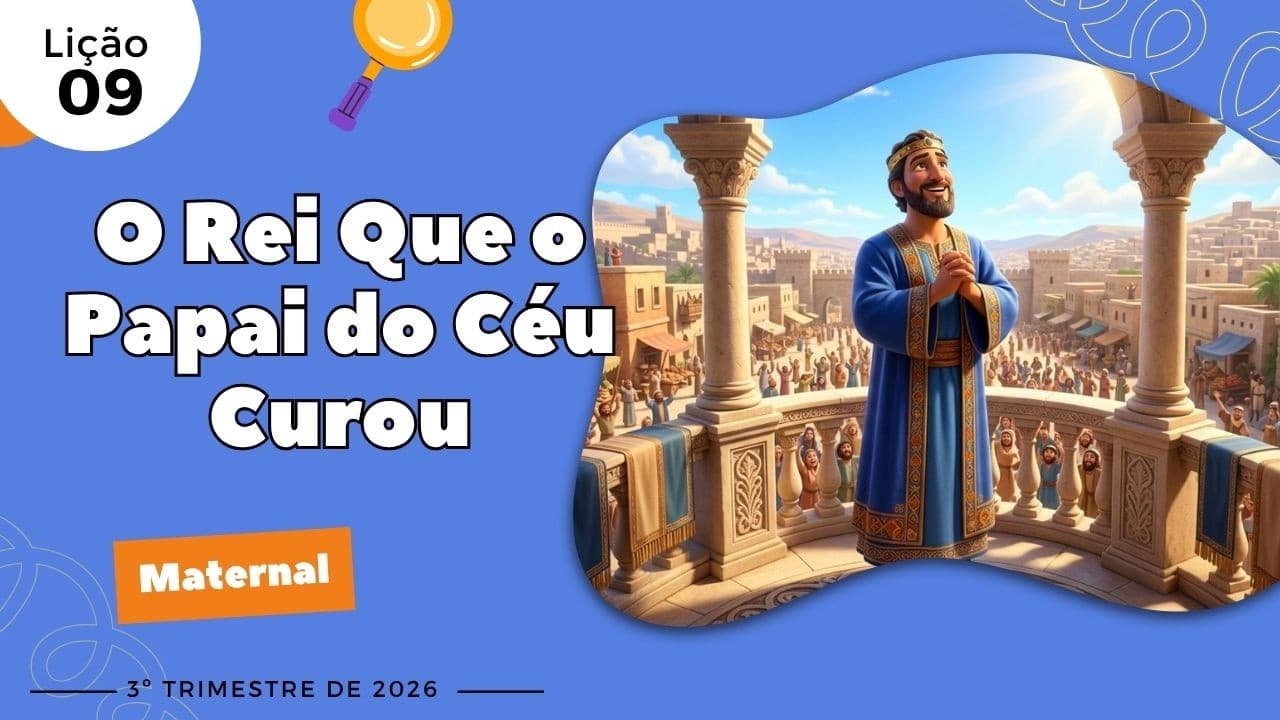
King Hezekiah loved to worship in the House of God. When he got very sick, he turned his face to the wall and prayed — and Heavenly Father heard, healed his boo-boo, and even made the shadow of the sun go backward. A lesson in short cycles about talking to God when it hurts.
Teacher, today's lesson has a huge advantage: every child in your classroom has already had a boo-boo. A scraped knee, a fever, a tummy ache, a shot at the clinic. That means King Hezekiah will not arrive as a distant character — he arrives as someone who felt what they have already felt.
Keep three sentences in mind and repeat them all morning: "King Hezekiah worshiped", "the king got a boo-boo and prayed", and "Father God healed".
Two precautions before you begin. The first is the word death. The biblical text shows the prophet Isaiah warning that the king would not recover — and none of that is going to be said in the classroom. For a three-year-old child, this is enough: "the king got very, very sick and had to stay in bed." No details, no gloomy voice, no suspense. Many children this age have a sick grandfather at home, and the class must not plant fear where it should plant trust.
The second precaution is bargaining. It is easy for this lesson to turn into "if you pray nice and right, God takes the boo-boo away right now" — and then the first cold that takes a while to go away becomes disappointment with God. Teach what is right, sized for them: we talk to Father God when it hurts, because He hears and He cares. God heals, and He heals today. But He is good when He heals and remains good while we wait. And praying does not fight with medicine or with the doctor: God also takes care of us through the hands of those who treat our boo-boo.
I — Arrival: the Surprise Box and the big bandage
Arrive early. While you organize the materials, pray for the children and their families. Greet each child by name, crouching down at eye level, and ask calmly: "How are you today? Do you have any boo-boos?" Listen to the whole answer, even if it is the story of a scratch from three weeks ago.
Open the Bible and show the books of Samuel, Kings, and Esther. Say: "Right here, from the Book of God, come the stories of the kings and queens we are learning about. Today there is a king who loved Father God."
Now bring out the closed Surprise Box and build a little mystery:
— What could be inside here today? Shall we open it together? One... two... three!
Take out a very big bandage (it can be a rectangle of colored poster board shaped like a band-aid). Hold it up high for everyone to see.
— What is this? That's right, a bandage! We put a bandage on when we have a boo-boo. Raise your little hand if you have ever had a boo-boo! (Raise yours first — everyone raises theirs.) Today our story is about a king who had a very big boo-boo. And do you know who took care of him? Father God!
Do the thanksgiving and the offering with a single sentence: "Thank You, Father God, because You take care of me."
After that, have a very lively time of praise — the lesson calls for it, and the king in the story is precisely the king who worshiped. Clap hands, let them jump, sing out loud.
🏛 Fun fact — what is a sundial? Before wristwatches and cell phones existed, people found out the time by looking at the shadow. You stick a little stick in the ground, and as the sun moves across the sky, the shadow of the stick moves too: in the morning to one side, in the afternoon to the other. That was how King Hezekiah's people knew if it was lunchtime. Hold on to that — in just a little bit, that shadow is going to do something no shadow ever does.
II — The story: the king worshiped, the king prayed, and Father God healed
Seat the children in a circle, very close to you, with the pictures from the quarterly in hand. Review last week's class: "Who remembers the name of the baby whom his auntie hid in the House of God? JO-ASH!" Clap on the syllables.
Today our story has a king. His name is Hezekiah. Shall we say it together, clapping our hands? HEZ-E-KI-AH.
King Hezekiah loved Father God with all his heart. Except his people had forgotten to go to the House of God. So the king called everyone:
— Come on! Let's all go together to worship Father God!
And the people went. Oh, what a beautiful celebration! Some played the harp (make a strumming gesture), others blew the trumpet (hands at your mouth, "toot-toot-tooooot!"), others crashed the cymbals real loud (clap your hands like cymbals). Shall we play together? (Let them make noise for about ten seconds. Then bring your voice down low.)
And they sang like this: "Thank You, Father God! You are good!" It was so good, so very good, that the worship celebration lasted a whole week — and the people did not want to go home! So they stayed another week worshiping. Father God was glad with His people in His House.
(Lower your tone here. Calm voice, without a scared face.)
But one day something a little sad happened. King Hezekiah got sick. A big boo-boo that left him in bed, with no strength even to get up. Shall we make a sad little face for the king? (Everyone pouts. Do not linger here — move right along.)
And what do you think the king did? He did not scream, he did not fight, and he did not cry alone. The king turned his face to the wall and talked to Father God. Shall we do just like the king? Put your little hands together... close your little eyes... and repeat after me, very slowly:
— Father God... please... heal my boo-boo. Amen!
(Wait. Let three seconds of silence happen. It is the most beautiful moment of the class.)
And now comes the most wonderful part of all. Father God heard the king. He sent the prophet Isaiah running back with a message: "God has heard your prayer and seen your tears. He is going to heal you!"
And He healed him! The boo-boo went all away! Shall we clap our hands for Father God who heals? (Clapping, jumping, joy — let them make noise.)
And God did one more thing, just so the king would be very sure it was really Him. Remember the shadow on the sundial, which moves forward all day long? That day, the shadow went backward! It climbed the stairs in reverse! Shall we spin our little arms backward real fast, like time going back? Spin, spin, spin! (Everyone spins. Then stop and open your arms wide.)
Only Father God can do something like that, because He is the One who made the sun.
Repeat with the children, clapping hands: "The king worshiped! The king prayed! Father God healed!"
❤ For the child's heart. When your little body gets a boo-boo — a fever, a tummy ache, a scraped knee — you can talk to Father God right away, just the way the king talked: "Father God, take care of me." And tell Daddy, Mommy, or your classroom teacher too, because God takes care of you through the hands of those who love you. Speaking up when it hurts is the right thing to do. You are never alone with your boo-boo.
III — Singing, memorizing, and keeping in the heart
Sing. A short song with gestures, three times in a row: "Father God heals my boo-boo." Little hands on the knee on "boo-boo", little arms up high on "Father God".
The verse with the pictures. Cut out of poster board a little leg with a foot, a little arm with a hand, an eye, a mouth, and a heart. Glue a craft stick to the back of each cutout and divide the words of the verse among them. Hold them up one at a time and always say it the same way: "saying, “If you will listen carefully to the voice of the LORD your God, and do what is right in His eyes, and pay attention to His commands, and keep all His statutes, then I will not bring on you any of the diseases I inflicted on the Egyptians. For I am the LORD who heals you.”" (Exodus 15:26) Explain very simply: "God heals the boo-boo on your leg, your arm, your little eye, your mouth, and your heart. God heals a boo-boo anywhere."
The classroom sundial. Stick a wooden skewer into the middle of a paper plate or a poster-board circle, tape it in place, and shine a flashlight from one side. Show the shadow of the stick to everyone. Move the flashlight slowly and let them shout, "Look, the shadow moved!" Then move the flashlight backward and say: "And in King Hezekiah's day, the shadow went back! God is in charge even of the sun!" Everyone spins their little arms backward. Repeat as many times as time allows.
The drawing of myself. Give each child a sheet of paper with the verse written at the top, along with a black pencil and crayons. Ask them to draw themselves — head, little arms, little legs, however it turns out. When they finish, read the verse with them, point to the drawing, and ask: "Who is this person right here?" Listen to the name and answer: "Then that's it: God heals [name]'s boo-boo, and He wants you to thank Him for that." At this age, hearing their own name inside the promise is worth more than any explanation.
Crafts and goodbye. In the quarterly, help the children color the letters of the word LIFE (VIDA) — tell them that it is Father God who gives life and who healed the king. Then show the two pictures of the king: the sad one, when he had the boo-boo, and the smiling one, after God healed him. Ask them to color the smiling king. Put the materials away together, clapping in rhythm: "It is time, it is time, it is time to clean up. Let's all work together to tidy up our room!" Review with the three sentences, pray, and say goodbye to each child by name.
Christ in the Lesson
This story is bigger than a healing. Hezekiah was a king who opened the doors of the House of God again at a time when almost no one remembered the Lord — and the result was a celebration of worship that the people did not want to end: "The whole assembly agreed to observe seven more days, so they observed seven days with joy." (2 Chronicles 30:23) Worship is not a duty checked off; it is people who have discovered that God is good and do not want to leave His side.
And see how God answers that sick king: "“Go back and tell Hezekiah the leader of My people that this is what the LORD, the God of your father David, says: ‘I have heard your prayer; I have seen your tears. I will surely heal you. On the third day from now you will go up to the house of the LORD.”" (2 Kings 20:5) It is not only the request that God hears — it is the tears that He sees. That is the God the child is meeting today.
But Hezekiah's healing had an expiration date. He was given fifteen more years and later got sick again, like all of us — because the deepest boo-boo of a human being is not in the body; it is in the heart. That one, no medicine can reach. That is why the prophet pointed to Someone who would come: "But He was pierced for our transgressions, He was crushed for our iniquities; the punishment that brought us peace was upon Him, and by His stripes we are healed." (Isaiah 53:5) Jesus took the wound upon Himself to heal ours. The king prayed and was healed; Jesus was wounded so that we might be healed on the inside, forever.
To the child, say it simply: "Father God healed the king's boo-boo. And He sent Jesus to heal the boo-boo in our heart, which is the most important one of all."
Practical Application
Praying is the first reaction, not the last. When your child gets hurt at home, stop everything for ten seconds and pray right then and there, holding them in your lap: "Father God, take care of their boo-boo." A small child does not learn prayer through explanation — they learn because they saw a grown-up do it when it hurt.
No bargaining with God. Never say, "If you pray nice and right, Father God will take the boo-boo away right now." Say: "Father God heard you, and He takes care of you." God heals, and He heals today — but He is not a vending machine for requests, and a child must not learn to bargain with Him.
Praying and taking care of the little body go together. Taking medicine, going to the doctor, washing hands, going to bed early. God also takes care of us through the hands of those who treat our boo-boo — and the child needs to hear that from the teacher, in plain words.
Worshiping belongs at home too. The king called the whole nation to worship. Sing at home, give thanks out loud at the table, bring your child to church with joy. Someone who learns at age three that the House of God is a place of celebration rarely thinks at age thirty that it is a burden.
The grown-up handles it; the child tells. Teach the child to always tell whenever something hurts, scares, or injures them — and never to try to fix it alone. The grown-up is the one who takes care of it. That is how Father God deals with us.
Closing Prayer
Father God, thank You because You heard King Hezekiah's prayer, saw his tears, and healed his boo-boo. Teach these children to run to You every time something hurts, and to thank You every time they get better. Take care of every little body in this classroom and every family that came here today. And thank You because Jesus was wounded to heal the boo-boo in our heart. In His name, amen.
Soli Deo Gloria — Scripture governs; everything else, on its knees.
Frequently asked questions about this lesson
Who was King Hezekiah and what does Preschool Lesson 9 teach?+
Hezekiah was a king of Judah who loved God. He called the people back to worship in the House of the Lord and, when he became seriously ill, he prayed — and God healed him and even gave him fifteen more years of life (2 Kings 20). For a 3-year-old child, the lesson comes down to one sentence: when it hurts, we talk to Heavenly Father.
How do you talk about sickness with a 3-year-old child without scaring them?+
Use the word they already know: boo-boo. 'The king got very, very sick, so sick that he had to stay in bed.' Do not talk about death, do not describe symptoms, and do not use a scary voice. As soon as you tell the sad part, move right away to the prayer and the healing — almost all the class time stays on the good part.
Does God heal today? What do I say if the child prays and the person does not get better?+
Yes, God heals today, and the prayer of faith has its place in the church (James 5:14, 15). But healing is neither a trade nor a prize: never say there was a lack of faith, and never promise the child that the person will get well by Sunday. Tell the truth in a way that fits their age: 'Heavenly Father heard you, He takes care of Grandpa, and we keep praying.' God is good when He heals and remains good while we wait.
Does praying replace doctors and medicine?+
No. Praying and taking care of our little bodies go together. Teach it like this: 'we pray, take the medicine Mommy gives us, and go to the doctor — Heavenly Father also takes care of us through the hands of those who treat our boo-boo.' Young children take the lesson literally; this sentence prevents a serious misunderstanding at home.
What is the verse for Preschool Lesson 9 and how can we memorize it with gestures?+
The final part of Exodus 15:26, where the LORD declares that He is the One who heals you (Exodus 15:26). Cut out of poster board a little leg, a little arm, an eye, a mouth, and a heart, glue a stick behind each cutout, and distribute the words among them. With each repetition, the child holds up a cutout and gently touches that part of their own body.
What was the miracle of the shadow that went backward?+
Hezekiah asked for a sign, and God made the shadow on the sundial go back ten steps on the stairway (2 Kings 20:9-11). With the children, do not explain astronomy: show the shadow of a stick poked into a paper plate, shine a flashlight on it, and say that God is in charge even of the sun. Then everyone spins their little arms backward — the body remembers what the mind cannot yet understand.
Teacher's Guide
Essence of the lesson
When it hurts, we talk to Father God — He hears, He cares, and He heals.
Lesson map
| Time | Stage |
|---|---|
| 0–7 min | Arrival, the Surprise Box with the big bandage + thanksgiving and offering |
| 7–12 min | Lively praise + verse with the body-part cutouts |
| 12–20 min | The story of King Hezekiah with the pictures from the quarterly |
| 20–27 min | Class activity: "the sun that went back" |
| 27–33 min | The drawing of myself with the verse at the top |
| 33–40 min | Snack + quarterly activities (the word LIFE and the smiling king) |
| 40–45 min | Prayer, review, and goodbye |
Start like this
Come in with the closed Surprise Box and build a little mystery: "What could be inside here today? Shall we open it together? One... two... three!" Pull out a very big bandage (it can be made of poster board) and hold it up high. Ask: "Raise your little hand if you have ever had a boo-boo!" Raise yours first — everyone will raise theirs, and several will want to tell the whole story of how they got hurt. Listen to two or three and wrap up: "Today our story is about a king who had a very big boo-boo. And do you know who took care of him? Father God!" Leave the bandage hanging in plain sight for the whole class.
Point 1 — The king who called everyone to worship
- In the quarterly: the story section, where the king gathers the people in the House of God (pictures 9.1 and 9.2).
- What to teach: Hezekiah loved Father God and saw that the people had forgotten to worship. He called everyone back to the House of God, and the celebration was so good that it lasted two weeks. Worshiping is a joyful thing: singing, clapping hands, playing instruments, giving thanks.
- Anchor verse: "The whole assembly agreed to observe seven more days, so they observed seven days with joy." (2 Chronicles 30:23) With the children, use only the idea: "they stayed another week worshiping, because it was so good."
- Key question: "Shall we play instruments like the king's people? Who plays the harp, who blows the trumpet, who crashes the cymbals?"
- Likely answers (+ going deeper): noise, laughter, a child imitating you before even understanding. Go deeper: "That's right! To worship is to say to Father God: thank You, You are good!"
- If no one speaks: start playing the imaginary trumpet yourself, real loud and off-key. Imitation comes on its own — at this age, an imitated gesture is already participation.
Point 2 — The king got a boo-boo and prayed
- In the quarterly: the story section, starting from the picture of the sick king (picture 9.3).
- What to teach: the king got very sick — and that is all the child needs to hear, with no details and without mentioning death. What matters is what he did: he turned his face to the wall and talked to Father God. Pray the prayer together with the children, little hands folded, a single sentence.
- Anchor verse: "Then Hezekiah turned his face to the wall and prayed to the LORD, saying," (2 Kings 20:2)
- Key question: "Have you ever had a boo-boo? Where did it hurt?"
- Likely answers (+ going deeper): "on my knee!", "in my tummy", "I got a shot", the whole story of falling off a bike. Go deeper: "And when it hurts, we can talk to Father God right away, just like the king."
- If no one speaks: tell yours first — "the other day I stubbed my big toe and it hurt so much that I talked to Father God right on the spot." After that, everyone will want to tell theirs.
Point 3 — Father God heard and healed
- In the quarterly: the end of the story section (picture 9.4) and the student section, with the word LIFE (VIDA) and the two pictures of the king.
- What to teach: God heard the prayer, saw the king's tears, and healed his boo-boo — and He even made the shadow go backward, because He is in charge even of the sun. Always finish here: the same God who took care of the king takes care of every child in this classroom. Without promising that someone's boo-boo at home will be healed by Sunday.
- Anchor verse: "“Go back and tell Hezekiah the leader of My people that this is what the LORD, the God of your father David, says: ‘I have heard your prayer; I have seen your tears. I will surely heal you. On the third day from now you will go up to the house of the LORD.”" (2 Kings 20:5)
- Key question: "Shall we show the king's little face when he had a boo-boo? And now his face after God healed him?"
- Likely answers (+ going deeper): a pout, hands on the face, and then a huge smile with clapping. Go deeper: "That is just how it was! The king was very, very happy. And he thanked Father God."
- If no one speaks: make the two faces yourself, really exaggerated, and show the two pictures in the quarterly side by side. They will point before they speak.
Class activity
- Goal: to help their bodies remember the idea that God is in charge even of the sun and hears those who talk to Him — with no scares, no competition, no one singled out, and no one touching anyone else.
- Materials: a paper plate or a circle of poster board, a wooden skewer, tape, and a flashlight (a cell phone flashlight works).
- Step by step: stick the skewer into the middle of the plate and secure it with tape. Set it on the floor in the middle of the circle, and turn off or dim the classroom lights. Shine the flashlight from one side and show the shadow of the stick. Move the flashlight very slowly and let them shout, "The shadow moved!" Then pause, build a little mystery, and move the flashlight back to where it came from: "And in King Hezekiah's day, the shadow WENT BACK!" Everyone stands up and spins their little arms backward real fast, chanting, "Spin, spin, spin!", and at the end they open their arms wide and say together: "God is in charge even of the sun!" Repeat as many times as time allows, always with everyone participating.
- Wrap-up (back to the text): "Father God made the sun, is in charge of the sun, and makes the shadow go back whenever He wants. That God who is so big stopped to hear the prayer of a sick little king — and He stops to hear you too."
Wrap-up + challenge of the week
- Wrap-up: "King Hezekiah called everyone to worship. Later he got a very big boo-boo and talked to Father God. And Father God heard, saw his tears, and healed him. That same God hears you. And He sent Jesus to heal the boo-boo in our heart, which is the most important one of all."
- Challenge: ask the parents at the door: every night this week, before bed, pray together with your child a one-sentence prayer for someone who has a boo-boo — "Father God, heal ______'s boo-boo" — letting the child say the person's name. On Sunday, ask each child whom they prayed for during the week. Be ready to hear the names of grandparents, pets, and cartoon characters; welcome them all with the same joy.
Teacher's kit
- Before: read 2 Kings 20:1-11 with the Bible open and the story section in the quarterly. Memorize the three anchor sentences — "the king worshiped", "the king prayed", "Father God healed" — and practice your voice: the part about the boo-boo is short and calm; the part about the prayer is slow and soft; the part about the healing is loud and joyful.
- Bring: the Surprise Box with the big bandage, the poster-board body-part cutouts with craft sticks, the plate with the skewer and the flashlight, sheets of paper with the verse written at the top, black pencils and crayons, and the quarterly.
- Safety: do not talk about death, do not describe illness, do not use a scary voice, and do not say "God let the king get sick because he did something wrong." If a child shares that someone at home is very sick, welcome it right away without asking for details in front of the others — "Thank you for telling us, let's pray for him right now" — pray a single sentence, and bring the matter to the church leadership that same day.
- Good to know: some children will ask whether Grandpa's boo-boo is going to get better. Do not make promises. Answer with truth and affection: "Father God heard our prayer and He takes care of Grandpa. We keep praying together."
- Pray beforehand: ask the Lord for steady hands and a gentle voice. In this lesson, the child learns more from the way you pray than from your words.
Homework
Your mission for the week
Moms and Dads, this activity is to be done together with your child. Every night this week, before bed, pray together a one-sentence prayer for someone who has a boo-boo. Let your child choose and say the person's name: "Father God, heal ______'s boo-boo. Amen." Little hands folded, little eyes closed, just the way King Hezekiah did.
Why
King Hezekiah turned his face to the wall and prayed (2 Kings 20:2) — and God answered: "“Go back and tell Hezekiah the leader of My people that this is what the LORD, the God of your father David, says: ‘I have heard your prayer; I have seen your tears. I will surely heal you. On the third day from now you will go up to the house of the LORD.”" (2 Kings 20:5) A three-year-old child does not understand an explanation about prayer, but does understand something that happens every night at the same time, by the side of the bed. Just do not turn it into a bargain: God hears and cares because He is good, not as a payment.
How to know you did it
Seven nights, seven names. If by Friday your child already says the name on their own without you reminding them, you did it.
On Sunday, come back with the story
Share in the classroom whom your child prayed for during the week. On Sunday, come back with the story.