Golden Text
“But Samuel declared: “Does the LORD delight in burnt offerings and sacrifices as much as in obedience to His voice? Behold, obedience is better than sacrifice, and attentiveness is better than the fat of rams.”” (1 Samuel 15:22, BSB) · Read in the Bible
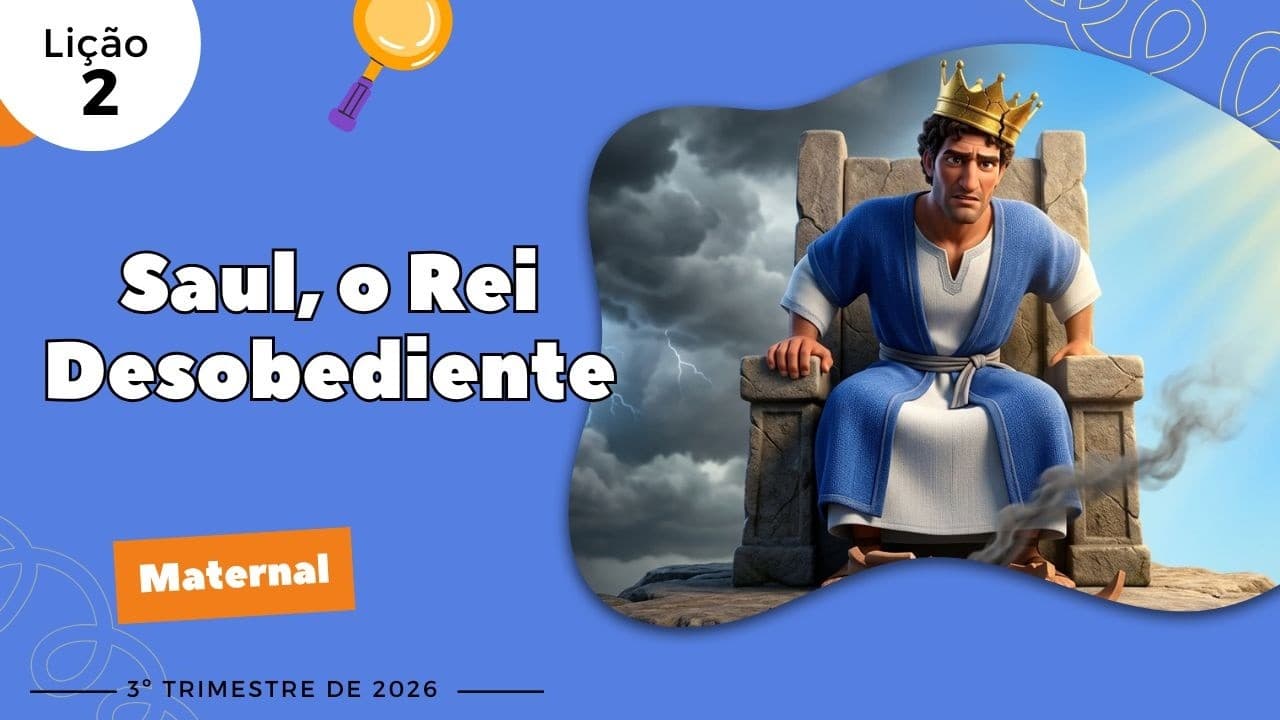
Saul started out well as king, but he kept disobeying Heavenly Father — he did things that only the priest was allowed to do and did not carry out God's orders in the battle against the Amalekites. Because of his disobedience, Saul lost the throne. The lesson teaches that obeying Heavenly Father is always better than doing our own will.
In the last class, we learned that Heavenly Father chose a young man named Saul to be the first king of the people of God. Today we are going to find out what happened to this king. Did he listen to Heavenly Father's voice? Did he do everything right? Sadly, Saul's story shows us that disobeying God brings consequences — and that it is always better to do Heavenly Father's will than our own will.
Preschool children already understand very well what it means to obey and to disobey. "Put the toys away!" — when they put them away, that is obedience; when they do not put them away, that is disobedience. This simple connection with everyday life is the bridge to the biblical truth of this class.
The story: the king who disobeyed
King Saul began his reign with courage. One day, the people of God were crying because some wicked enemies, called Ammonites, wanted to fight against them. Saul asked: — Why are you crying?
The people answered: — Because the Ammonites want to fight with us!
Then Heavenly Father filled Saul with strength and courage. Saul called his soldiers and, with God's help, defeated the enemies! The people were very happy. Saul was doing a good job as king — and his son Jonathan helped too.
But then came the problem. In another battle, against the Philistines, Saul became so afraid that he ended up doing something wrong: he offered a sacrifice to God, but only the priest could do that. Saul did not wait, he did not obey — he did it his own way.
Samuel was very sad and said: — You did not obey God! You were disobedient!
Later, Heavenly Father sent Saul to fight against the Amalekites — let's repeat it together: A-MAL-E-KITES! God gave Saul a very clear command. Would he obey this time? No! Saul disobeyed again. He did it the way he wanted, and not the way Heavenly Father commanded.
Then Heavenly Father spoke to Samuel: — Saul has abandoned me and disobeyed my commands!
Samuel was so sad that he prayed all night long for Saul. But the decision had already been made: Heavenly Father no longer wanted Saul to be king. He was going to choose a new king — someone with an obedient heart.
Saul's disobedience had a very big consequence: he lost the crown. When we disobey Heavenly Father, that is sin. But do you know something good? When we do something wrong and ask for forgiveness from the heart, Heavenly Father forgives us and makes our little heart clean again.
❤ For the child's heart. Do you know what it means to obey? It means doing what Heavenly Father asks, and what Daddy and Mommy ask — even when you feel like doing something different. King Saul did not obey and lost the crown. But Heavenly Father loves you and wants to help you do what is right. Just ask Him for help!
Christ in the Lesson
Saul disobeyed God, and his story ended in sadness. But there is someone who never disobeyed the Father — not even once. That someone is Jesus. The Bible says that Jesus was obedient in everything, even in the hardest hour of His life (Philippians 2:8). He obeyed the Father because He loved us and wanted to save us. When we teach that it is better to obey God, we are showing the children the path that Jesus walked — the path of obedience out of love. And more than that: Jesus gives us strength to obey. We do not have to do everything on our own. The Holy Spirit helps us do Heavenly Father's will every day.
Closing Prayer
Heavenly Father, thank You because You love us even when we do wrong. Help each child in this little classroom to have an obedient heart — one that listens to Your voice and does what is right. When we do wrong, remind us to ask for forgiveness, because You always forgive. Thank You for Jesus, who was obedient out of love for us. In His name, amen.
Soli Deo Gloria — Scripture governs; everything else, on its knees.
Frequently asked questions about this lesson
What is the central truth of Preschool Lesson 2 in the 3rd quarter?+
That obeying God is always the best way. Saul was chosen as king, but he repeatedly disobeyed Heavenly Father's orders. Because of his disobedience, he lost the right to be king. Using simple language, the lesson teaches 3- to 4-year-old children that obedience to God brings blessings and disobedience brings consequences. The verse is 1 Samuel 15:22.
How can you explain Saul's disobedience to 3- and 4-year-old children?+
Use everyday examples: when Mommy asks a child to put away their toys and the child does not put them away, that is disobedience. Saul did the same thing with Heavenly Father — God asked for one thing and Saul did something different. The consequence was losing his crown. Use a toy crown to illustrate: 'Saul lost his crown because he did not obey.'
What practical activities can the teacher use in this lesson?+
The quarterly suggests a target game: place a basket near the wall with a drawing of a target with 'obedience' written on it. Divide the class into boys and girls, and each group tries to hit the target with a ball. Explain that Saul missed the target by choosing to disobey, but our target is to obey Heavenly Father.
What is the memory verse for Preschool Lesson 2?+
The verse is "But Samuel declared: “Does the LORD delight in burnt offerings and sacrifices as much as in obedience to His voice? Behold, obedience is better than sacrifice, and attentiveness is better than the fat of rams.”" (1 Samuel 15:22). To memorize it with 3- to 4-year-old children, make a poster board crown with the name 'Saul' and the word 'disobedience' written below it. Repeat the verse with gestures: pointing up when saying 'God' and giving a 'thumbs-up' sign when saying 'obey'.
Teacher's Guide
Welcome. Greet each child with enthusiasm. Say: "Today we are going to learn about another king! Who remembers the name of the first king?" Let the children answer. If you bring a toy crown, place it on a child's head and say: "Did King Saul take good care of this crown?"
Praise. Sing a song about obedience, with simple gestures. You can use the melody of a familiar song and adapt the lyrics: "Obeying is good, obeying is good, Heavenly Father is happy when I obey!"
Verse (1 Samuel 15:22). Make the outline of a crown out of poster board and write the name "Saul" on it, with the word "disobedience" underneath. Read the verse from the Bible first. Then repeat it with the class using gestures: pointing up when saying "God" and giving a thumbs-up when saying "obey". Repeat it at least three times.
Bible story (1 Samuel 13–15). Use the pictures from the quarterly. Tell the story in a lively voice, asking questions throughout the narrative. When you talk about the Amalekites, ask the children to repeat the name broken into syllables. When you tell them that Saul disobeyed, make a sad face and ask: "Was that right or wrong?"
Game: Hit the target of obedience. Place a basket near the wall. Above the basket, tape up a drawing of a target with the word "obedience" written on it. Divide the class into two groups — boys and girls. Give a small ball to each group. Whoever hits the target wins! Afterward, explain: "Saul missed the target — he chose to disobey. But our target is to obey Heavenly Father!"
Student activity. Hand out the quarterlies, pencils, and crayons. Ask the children to color the picture of King Saul. While they are coloring, talk with them: "What happens when we disobey Daddy and Mommy? And when we disobey Heavenly Father?" Reinforce that asking for forgiveness is very important.
Prayer. In the prayer corner, say: "Let's ask Heavenly Father to help us obey." Pray with the children: "Heavenly Father, thank You for loving us. Help us to obey Your Word and to do Your will. Forgive us when we do wrong. In Jesus' name, amen."
Closing. Ask the children to help put the materials away. Repeat the verse one more time. Say goodbye to everyone warmly, telling them that next Sunday we will meet the new king that Heavenly Father chose — a little shepherd boy who took care of sheep!