Golden Text
“Teach me good judgment and knowledge, for I believe in Your commandments.” (Psalm 119:66, BSB) · Read in the Bible
A man stole from his own mother, got a scare, and returned the money. With part of that silver, the family had an idol made — to worship the true God. Then Micah hired a Levite for ten silver coins a year and concluded: now God will bless me. He was sincere from start to finish, and wrong from start to finish, because he had never read what God had already said. The lesson that closes the quarter shows the damage of a time when everyone did what seemed right in their own eyes — and ends with the only King and Priest whom no one needs to hire.
Imagine a person who decides to bake a cake without ever having seen a recipe.
He puts in flour — so far, so good. He puts in an egg — still good. Then he looks at the sink, sees the laundry detergent powder, and thinks: "It's white just like flour, it should work." He dumps it into the cake. He adds three little pebbles from the backyard, because he thinks they look pretty. And he puts it in the oven.
When that thing comes out of the oven turned into a gray rock, he gets mad:
"But I was sincere! I truly believed it would turn into a cake!"
Well, sincerity does not make a cake rise. A recipe does.
Today's story is about a man who did that exact thing — only not with a cake. With God.
His name was Micah, and the story is in Judges 17.
I — The stolen silver and the fright that is not repentance
The Bible begins this chapter in the most direct way possible: "Now a man named Micah from the hill country of Ephraim" (Judges 17:1) No introduction, no résumé. Just an ordinary man, in an ordinary house, in the middle of the hill country.
And the first thing we find out about him is that he stole.
He stole from his own mother. Eleven hundred pieces of silver.
To give you a sense of how big that was: a few verses later, the text itself tells us how much a priest was paid for a whole year of work — ten pieces of silver, plus clothes and food (Judges 17:10). Do the math. Eleven hundred pieces of silver could pay for a hundred and ten years of wages. It was not an allowance. It was a lifetime of savings.
His mother found out the money was gone and spoke a curse over the thief — not knowing the thief was standing right beside her, hearing everything.
And then Micah confesses:
"said to his mother, “The eleven hundred shekels of silver that were taken from you and about which I heard you utter a curse— I have the silver here with me; I took it.” Then his mother said, “Blessed be my son by the LORD!”" (Judges 17:2)
Now notice what made him open his mouth. It was not a heavy conscience. It was not thinking about God. It was the curse. He got scared of what might happen to him.
Giving something back because you are afraid of punishment is not the same thing as repenting before God. A child who puts the candy back because his mother showed up at the door is not repentant — he is caught. True repentance is when it hurts to have done it, even if no one were ever going to find out.
And his mother's response is just as crooked. Instead of dealing with the theft, she answers on the spot that her son is blessed by the LORD (Judges 17:2). She uses the name of the LORD to sweep the whole thing under the rug, as if a nice word on top could erase what happened underneath.
Hold on to that detail, because it explains the whole family: they used the right name of God to do the wrong thing.
🔍 Did you know? — the same amount. Eleven hundred pieces of silver is the exact amount that appears only one other time in the book of Judges: it was what each Philistine ruler offered Delilah to hand over Samson (Judges 16:5). Many who study the book notice that the author repeats the figure on purpose, as if to say: the same money that brought Israel down from the outside, in the story of chapter 16, brings Israel down from the inside, in the story of chapter 17. We cannot prove the writer's intention, but the coincidence is hard to ignore — and the message is strong: the damage that comes from inside the house costs the very same price as the damage that comes from the enemy.
II — The god that fit inside the house
Then comes the strangest part of the story.
The mother gets the silver back and decides to do something "religious" with it:
"And when he had returned the eleven hundred shekels of silver to his mother, she said, “I wholly dedicate the silver to the LORD for my son’s benefit, to make a graven image and a molten idol. Therefore I will now return it to you.”" (Judges 17:3)
Read that again slowly. She dedicates to the LORD stolen money — and uses it to have two images made.
Two hundred pieces of silver ended up in the hands of a silversmith (a person who works with silver and gold, melting and hammering the metal), and from there came the two pieces, which stayed in Micah's house (Judges 17:4).
Micah did not stop there. The text continues:
"Now this man Micah had a shrine, and he made an ephod and some household idols, and ordained one of his sons as his priest." (Judges 17:5)
In plain words: he set up a private temple in his own backyard. An ephod was the garment a real priest wore to serve God — Micah had an imitation made. Teraphim were little household idols that families of other nations kept inside their homes thinking they brought luck and protection. And since he now had the place and the outfit, he appointed one of his own sons as priest.
Everything set up. Everything looking like religion. And everything forbidden.
Because God had already said, in plain words, centuries earlier:
"You shall not make for yourself an idol in the form of anything in the heavens above, on the earth below, or in the waters beneath." (Exodus 20:4)
It was not a rule hidden in a footnote. It was the second of the Ten Commandments, the list every Israelite was supposed to know by heart.
And why does God forbid this, after all? There is a simple answer and it fits in the palm of your hand: because any image we make will always be smaller than God. A silver statue has a size, has a weight, fits in a corner of the room, and does not move from its spot. God does not fit. Making an image of Him is like trying to draw the whole ocean on a notebook page and then saying: "There, the ocean is right here."
There is something even worse, and this is what really hits home: a god that I manufacture is a god that I boss around. I choose the size, I choose where it stays, I choose what it asks of me. Micah was not looking for a God to obey. He was building a god to use.
III — The priest for hire
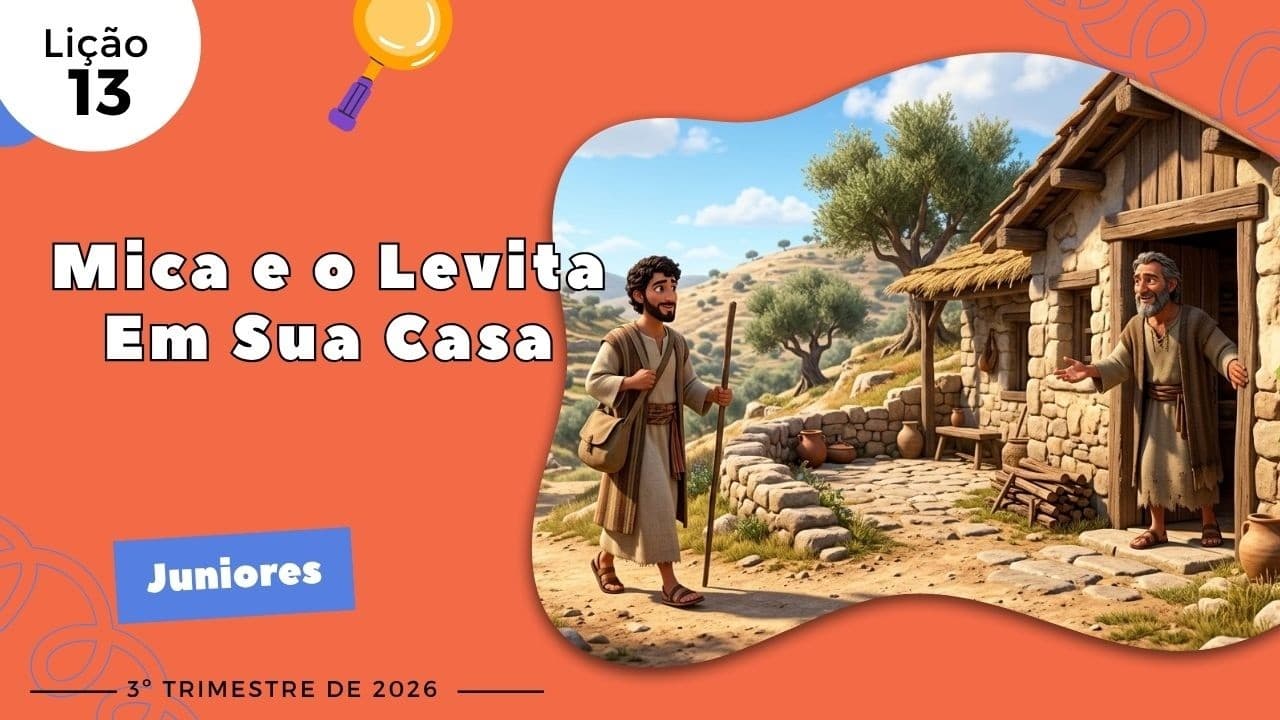
One piece was still missing from Micah's puzzle: a real priest. And one day that piece knocked on his door all by itself.
"And there was a young Levite from Bethlehem in Judah who had been residing within the clan of Judah." (Judges 17:7)
The Levites were the tribe set apart by God to care for the tabernacle and, above all, to teach the Law to the people. They were the ones who should have been telling Israel what God had spoken. That was their life's work.
Except this young man was walking through the country looking for wherever he might find a place (Judges 17:8) — that is, looking for wherever things would work out best for him.
Micah looked at that Levite and made an offer:
"“Stay with me,” Micah said to him, “and be my father and priest, and I will give you ten shekels of silver per year, a suit of clothes, and your provisions.” So the Levite went in" (Judges 17:10)
Wages, clothes, and food. A contract.
And the man who was supposed to teach the Law of God — the very Law that forbids carved images — agreed to work inside a house full of them. The Bible records his acceptance in a short, dry phrase: and the Levite went in (Judges 17:10).
He went in. He saw the idols. And he stayed.
Then Micah does the math of his life out loud, and this sentence is the heart of the entire lesson:
"Then Micah said, “Now I know that the LORD will be good to me, because a Levite has become my priest.”" (Judges 17:13)
Now I know. What absolute certainty, right? He had everything: the place of worship, the images, the priestly garment, and now a real Levite, hired and paid on time. In his head, the package was complete and the blessing was guaranteed.
There is just one problem. God is not a candy vending machine, where you put in the right coin and the package drops down. No one buys a blessing. You do not buy it with money, you do not buy it by hiring important people, you do not buy it by having the right person next to you. Micah thought he was making a good deal with God — and God was never in that deal.
And it really did not work. In the next chapter, warriors from another tribe passed through there, carried the idols away, and took the Levite along with them — who switched bosses on the spot, because the new position was bigger (Judges 18). Micah was left without silver, without gods, and without a priest. The religion he put together with his own hands walked away in the hands of others.
📜 Did you know? — the Levite's name. Further on, the Bible gives this young man's name: Jonathan, the son of Gershom, the son of Manasseh (Judges 18:30). In the oldest Hebrew text, however, there is a tiny letter written above the line, out of place, right in that name. Because of it, many scholars understand that the original name there was Moses — which would make this Levite a grandson of Israel's greatest leader. Others understand that it really was Manasseh. The Bible does not settle that question, and neither do we. But in either reading, the message hits the same way: no one inherits faith from a grandfather. A fine last name, a churchgoing family, and a preacher grandfather do not put anything inside you. Each person needs to know God personally.
IV — "Everyone did what seemed right in his own eyes"
Right in the middle of all this mess, the author of Judges pauses the story and writes a single sentence of explanation. It is the key to everything:
"In those days there was no king in Israel; everyone did what was right in his own eyes." (Judges 17:6)
And the book ends by repeating the very same thing, so no one can say they did not understand: "In those days there was no king in Israel; everyone did what was right in his own eyes." (Judges 21:25)
It was not just that a king was missing from the throne. Israel had a King: God Himself, who brought them out of Egypt and gave them the written Law. The problem is that they stopped treating Him as King. Everyone became the judge of their own right and wrong.
That sentence is three thousand years old, and you hear a version of it every week: "to each his own", "that's what works for me", "this is my truth", "who are you to say what's right?".
It sounds like freedom. But look at what it led to in Ephraim: a family stealing, manufacturing a god, buying a priest — and with a clear conscience. Nobody there thought they were wrong. And that was justru the size of the problem.
Because the Bible warns:
"There is a way that seems right to a man, but its end is the way of death." (Proverbs 14:12)
It seems right. That is the danger. Micah did not choose the path that seemed wrong; he chose the one that seemed right — to his own eyes.
And God explains where the damage comes from:
"My people are destroyed for lack of knowledge. Because you have rejected knowledge, I will also reject you as My priests. Since you have forgotten the law of your God, I will also forget your children." (Hosea 4:6)
It was not an army that destroyed that generation. It was not knowing. They had the Law of God written down, available, and they did not read it. It is like having the appliance manual in the drawer and breaking everything by guessing.
The opposite of that is also written, and it is the way out:
"Your word is a lamp to my feet and a light to my path." (Psalm 119:105)
"I have hidden Your word in my heart that I might not sin against You." (Psalm 119:11)
"All Scripture is God-breathed and is useful for instruction, for conviction, for correction, and for training in righteousness," (2 Timothy 3:16)
Whoever does not know the Word is left adrift, carried away by any talk, so that we should no longer be unstable children, tossed back and forth by every wind of teaching (Ephesians 4:14). That is why today's Golden Text is a request — and it is a request you can make right now, in your own words: "Teach me good judgment and knowledge, for I believe in Your commandments." (Psalm 119:66)
⚠️ What this lesson DOES NOT authorize. This is a lesson about idolatry, and for that reason it needs to come with a very big warning. Knowing the truth never gives anyone the right to mistreat anyone else. This lesson does not authorize you to laugh at a classmate who has another religion, to call people names, to leave someone out of the group, to tell a friend that his family is going to hell, or to "correct" any adult. None of that is Christian, and none of that is in the Manual. The Manual says the opposite: to answer with gentleness and respect (1 Peter 3:15) and, if possible, as far as it depends on you, to live at peace with everyone (Romans 12:18). Micah did not need someone pointing a finger at him; he needed someone who would have opened the Word of God with him. Be that person. And if anything leaves you confused or afraid, do not argue at school or at home: ask a trusted adult — your dad, your mom, your teacher, your pastor.
Christ in the Lesson
Notice what Micah was trying to get, because it is beautiful when it clicks.
He wanted a place where God was close. He wanted a priest who would speak to God for him. And he wanted the certainty of blessing — to sleep peacefully knowing that everything was right with God.
Those three things are not foolish. They are the right things to want. Micah's mistake was not wanting them; it was trying to manufacture with silver, a contract, and imagination what only God can give.
And God gave them. He gave all three, for free, in Jesus.
Jesus is the King Israel did not have. The book of Judges ends by lamenting that there was no king in Israel, and everyone did what seemed right in his own eyes (Judges 21:25). Now put beside that what Jesus said about Himself: "For I have come down from heaven, not to do My own will, but to do the will of Him who sent Me." (John 6:38) It is the exact opposite of Micah. Everyone there was doing their own will. Then came the One who did not do His own will even once.
Jesus is the Priest no one needs to hire. Micah paid ten pieces of silver a year for a priest for hire, who left as soon as a better offer came along. Ours is different: "Such a high priest truly befits us — One who is holy, innocent, undefiled, set apart from sinners, and exalted above the heavens." (Hebrews 7:26) He does not charge a salary, does not switch sides, and does not walk away. And He is able to save completely those who come to God through Him, because He always lives to intercede for them (Hebrews 7:25). While you are reading this, He is speaking about you with the Father.
Jesus is the image we did not need to manufacture. Micah melted silver to try to see God. But God had already solved that in His own way: He Himself came, with a face, with a voice, with hands. Anyone who wanted to know what God is like did not need a statue — all they had to do was look at Jesus. It was He who said: "Jesus answered, “I am the way and the truth and the life. No one comes to the Father except through Me.”" (John 14:6)
And here is the close of the entire quarter. For thirteen lessons we have followed judges who delivered Israel and then died, and the people went back to getting everything wrong all over again. Othniel, Ehud, Deborah, Gideon, Jephthah, Samson — all of them started something, none of them finished it. The book ends without a king, without a solution, with a man inventing a god in his backyard.
It is on purpose. Judges ends by leaving you hungry. It was written so that you would close the book asking: "So where is the good King?"
The good King arrived. He was born in Bethlehem of Judah — the very same little town that Levite came from when he traded God's calling for a salary. From that same land came the One who did the opposite: He gave His life without receiving anything in return.
❤ For the child's heart. Maybe you are reading this and thinking: "But I have never really read the Bible properly. Everything I know about God I heard from other people." Don't worry — everyone starts out that way, and hearing from others is刚how God wanted faith to reach you. Micah's mistake was not learning at home. It was never checking, never opening it to see with his own eyes what God said. And that is something you can start today, with a borrowed Bible, with just one verse. And one more thing, and this is important: if there is something in your house that you think does not match the Bible, you are not your family's inspector. Do not fight with anyone, do not hide anything, do not throw anything away. Talk to God about it — He hears a nine-year-old child just the same — and talk with a trusted adult at your church. The adult handles it; you let them know. Your job is to be a child, to learn, and to love your family.
Practical Application
Check before you believe. When someone tells you something about God — a friend, a video, someone in the family, even an adult — do not go around repeating it just because it came from someone nice. Go see if it is written. The Bible even praises those who do this: the Christians in the city of Berea were called more noble-minded because they examined the Scriptures every day to see if what they heard was true (Acts 17:11). Checking is not disrespect. It is the right way.
Notice when your "I think" wants to take charge. The most dangerous idea in the book of Judges is doing what seemed right in their own eyes. Every time you catch yourself thinking "I know it's wrong, but for me it's fine", the little red warning light has just turned on. That is right where Micah got lost, and he did not even notice.
Sincerity does not replace obedience. It is possible to be sincere and be wrong — and God does not change His rule just because we have good intentions. The good news is that His rule is good and you do not have to guess anything: it is all written down.
Do not try to buy God. "If I go to church every Sunday, God will give me what I want." "If I pray a lot before the test, I have to get an A." That is Micah's math, and Micah's math does not add up. God is neither bought nor hired — He is loved and obeyed. And the blessing He has already given is far too big to fit into a trade: He gave His own Son.
And treat kindly those who think differently. Knowing the truth is meant to make us kinder, not more arrogant. If you learned something today that your classmate still does not know, that does not make you better than him. It makes you responsible for sharing it the right way — with gentleness and respect (1 Peter 3:15) — and for praying for him.
Closing Prayer
Lord Jesus, thank You because You did not need to be manufactured by anyone. Micah melted silver to try to see God, and You came with a face, with a voice, and with hands. Forgive us for the times when we think we know and do not even go check, and for the times when we try to make a deal with You instead of obeying You. Teach us good judgment and knowledge, just as Your psalm asks. Give every child in this class a desire to open Your Word this week — and guard the mouth of each one, so that no one leaves here with hardness in their heart toward a classmate, a neighbor, or a relative who believes differently. May we be gentle as You are. You are the King Israel never had and the Priest no one needs to hire, and You live forever to intercede for us. In Jesus' name, amen.
Soli Deo Gloria — Scripture governs; everything else, on its knees.
Frequently asked questions about this lesson
Micah wanted to worship the true God. So why was he wrong?+
Because wanting to is not the same thing as obeying. His mother used the right name: "And when he had returned the eleven hundred shekels of silver to his mother, she said, “I wholly dedicate the silver to the LORD for my son’s benefit, to make a graven image and a molten idol. Therefore I will now return it to you.”" (Judges 17:3). Yet the way they chose was the exact thing God had explicitly forbidden: "You shall not make for yourself an idol in the form of anything in the heavens above, on the earth below, or in the waters beneath." (Exodus 20:4). God did not leave it up to us to put together the menu of worship. He Himself said how He wants to be worshiped, and He is the one who wrote that down — not us.
If a person believes from the heart, isn't that enough?+
It is not enough. You can be sincere and be wrong at the same time, and Micah is the proof of that. The Bible warns: "There is a way that seems right to a man, but its end is the way of death." (Proverbs 14:12). Sincerity is a good thing; it just does not turn what is wrong into what is right. That is why we check what is written, instead of trusting what we think.
So can I laugh at my classmate or my neighbor who has another religion?+
Not at all, and this is very serious. The lesson is about checking what **you** believe, not about pointing fingers at anyone. The Bible commands us to answer with gentleness and respect anyone who asks for the reason for the hope we have (1 Peter 3:15), and also: "If it is possible on your part, live at peace with everyone." (Romans 12:18). Mocking, name-calling, leaving someone out of the group, telling a classmate that their family is going to hell — none of that is in the Manual. Anyone who truly wants to help someone treats that person well and prays for them. And if you have a question about a different religion, ask a trusted adult instead of arguing at school.
Was the Levite really Moses' grandson?+
The Bible we read says Jonathan, son of Gershom, the son of Manasseh (Judges 18:30). In the oldest Hebrew text there is a tiny letter written above the line, out of place, right in that name — and because of that **many scholars understand** that Moses was originally written there, and that the letter was added later out of respect for the great leader. **Others understand** that it really was Manasseh. The Bible does not settle that question, so we do not settle it either. What it makes clear is what matters: no one inherits faith from a grandfather. Each person needs to know God personally.
Today nobody makes silver statues. Is the danger of idols over?+
It has only changed shape. An idol is anything that takes the place in your life that belongs to God and starts bossing you around: your phone, money, becoming famous, being the best in class, the opinion of your friends. Micah wanted a god the size of his house — one that would fit in a room and do what he wanted. The question remains the exact same: who is in charge of you when nobody is watching?
If I have a good pastor nearby, does God bless me more?+
That is exactly what Micah thought: "Then Micah said, “Now I know that the LORD will be good to me, because a Levite has become my priest.”" (Judges 17:13). And it did not work. God is not a system of exchange — nobody buys a blessing with money, connections, or having important people by their side. Pastors and teachers are gifts from God to teach and care for us, but the one who saves is Jesus, and you speak directly to Him: He is able to save completely those who come to God through Him (Hebrews 7:25).
Teacher's Guide
Essence of the class
Micah was sincere and wrong at the same time, because he invented a religion without ever checking what God had already said — and the antidote is not pointing a finger at those who get it wrong, it is opening the Manual. The King and Priest that Israel tried to manufacture with hired silver, God gave for free in Jesus.
Map of the class
| Time | Stage |
|---|---|
| 0–5 min | Opening — the sincere cake (the hook) |
| 5–13 min | Point 1 — The silver, the fright, and the homemade god |
| 13–21 min | Point 2 — The priest for hire and the math that does not add up |
| 21–28 min | Class activity "Check the Manual" |
| 28–34 min | Point 3 — "Everyone did what seemed right in his own eyes" + the warning |
| 34–40 min | Christ, the King and Priest + wrap-up + challenge + prayer |
Start like this
Walk in and announce, as seriously as can be: "Today I am going to teach you how to bake a cake."
Say the ingredients slowly, counting on your fingers: "Flour. Egg. Sugar." So far everyone agrees. Then keep going in the exact same tone: "Laundry detergent powder — because it's white just like flour. Three little pebbles from the backyard, because they look pretty. And vinegar, because I like it."
Let the class complain. There will be shouting and laughing, and that is the whole point.
When they are protesting, look offended and say: "Guys, but I am SINCERE! I truly believe it's going to turn into a cake!"
Wait for the laughter to die down and ask, now in a different tone: "Does being sincere make the cake rise?"
They will say no. Then follow up: "Today we are going to meet a man who did this with God. He had never read what God wrote, so he made up the recipe — and he was absolutely certain that everything was right."
Point 1 — The silver, the fright, and the homemade god
- In the quarterly: the beginning of Exploring the Scriptures — the theft of the eleven hundred pieces of silver, the mother's curse, Micah's confession out of fear, the silver handed over to the silversmith, and the idol placed inside the house. Plus the two Vocabulary words: curse and silversmith.
- What to teach: three sentences. (1) Micah stole a fortune from his own mother — use the math the text itself gives: a priest earned ten pieces of silver a year (Judges 17:10), so eleven hundred pieces was a hundred and ten years of wages. (2) He only confessed after hearing the curse: giving something back out of fear of punishment is not the same thing as repenting before God (children get this right away — it is the difference between being sorry and being caught). (3) His mother took the stolen money, said she was dedicating it to the LORD, and had an idol made — breaking the second commandment with the right name of God in her mouth. Close by explaining why God forbids images: every image is smaller than God, and a god that I manufacture is a god that I boss around.
- Anchor verse (BSB): "You shall not make for yourself an idol in the form of anything in the heavens above, on the earth below, or in the waters beneath." (Exodus 20:4)
- Key question: "What is the difference between being truly sorry and just being afraid of getting in trouble?"
- Likely answers (+ going deeper): "being sorry is when it hurts inside", "fear is when you got caught", "it's the same thing". Go deeper: "If no one were ever going to find out, would you give it back anyway? That's how you can tell."
- If no one speaks: share first, with a very small, low-drama example — a time when you only apologized because you were caught red-handed. Then ask again.
Point 2 — The priest for hire and the math that does not add up
- In the quarterly: the section of Exploring the Scriptures about the young Levite from Bethlehem of Judah who arrived at Micah's house, the deal of ten pieces of silver a year with food and clothes, and Micah's statement in Judges 17:13. Plus the box explaining who the priests and Levites were and what they were supposed to do.
- What to teach: explain first what the Levite's job was — to care for the service of God and, above all, to teach the Law to the people. He was the one who should have told Micah that all of that was forbidden. Instead, he saw the idols, received the salary offer, and stayed: and the Levite went in (Judges 17:10). Then read Micah's statement out loud, very slowly, and underline the "now I know": he thought he had completed the package and bought the blessing. Say the sentence the class will take home: "God is not a candy vending machine — no one puts in the right coin and gets a blessing." Finish by telling, in one sentence, the end of the story: in the next chapter another tribe passed through there, took the idols, and took the Levite along with them, who switched bosses for a bigger position (Judges 18). Micah was left with nothing.
- Anchor verse (BSB): "Then Micah said, “Now I know that the LORD will be good to me, because a Levite has become my priest.”" (Judges 17:13)
- Key question: "Can anyone buy anything from God?"
- Likely answers (+ going deeper): "no", "if I pray a lot He has to give it to me", "if I go to church every week He helps me more". Go deeper carefully and without sarcasm: "So is someone who goes to church more loved more by God? Or does He love us before we do anything?" Attention, teacher: this is the moment to tear down the idea of bargaining with God, without devaluing church and prayer — we go, pray, and obey because we love Him, not to get something in return.
- If no one speaks: ask in another, very concrete way: "If I give my snack to my friend, does he have to give me his? And if I pray before a test, does God have to give me an A?"
Point 3 — "Everyone did what seemed right in his own eyes"
- In the quarterly: the conclusion of Exploring the Scriptures, which explains that that generation was far from God and adopted idolatrous customs thinking it was true worship; the Lesson Objective ("to point out that lack of knowledge of the Word of God can bring problems"); and Memorizing, with Psalm 119:66 and the reflection on seeking wisdom in God.
- What to teach: read Judges 17:6 and say that this sentence appears again in the very last verse of the book (Judges 21:25) — the author repeats it on purpose. Explain that a real king was not what was missing: what was missing was treating God as King. Everyone became the judge of their own right and wrong. Bring it to today with the phrases they already hear — "to each his own", "that's what works for me", "this is my truth" — and show the danger with Proverbs 14:12: the way seems right. Micah did not choose what seemed wrong. Close in Hosea 4:6 (the people were destroyed for lack of knowledge) and in the Golden Text of the day, which is the closing prayer: asking God to teach us good judgment and knowledge (Psalm 119:66). And give the warning in the block below in plain words — it is not optional in this lesson.
- Anchor verse (BSB): "In those days there was no king in Israel; everyone did what was right in his own eyes." (Judges 17:6)
- Key question: "Is there anything that is wrong even when everybody thinks it is right?"
- Likely answers (+ going deeper): "yes, stealing", "if everybody does it, it's not that wrong", "it depends on the person". Go deeper: "And who decides that? If everyone decides their own, what happens when two people disagree?"
- If no one speaks: give a school example without singling anyone out: "In my class, everyone thought cheating on a test was normal. Did everyone thinking it was right make it right?"
Class activity
- Goal: to make the class feel the difference between "it seems right to me" and "it is written", and to practice with their own hands the gesture of opening the Bible to check — which is the task for the week.
- Materials: one Bible for each pair (the class or church Bibles work fine — no one needs to bring their own, and no student is left out for not having one), two large sheets of paper reading "SEEMS RIGHT" and "IT'S IN THE MANUAL", tape to put them on the walls, and the list of statements already written down on a sheet of your own.
- Step by step: (1) Tape the two posters on opposite walls of the room. (2) Read a statement and ask everyone to walk over to whichever poster they think fits. (3) Before giving any answer, hand the reference to one pair and ask them to read it out loud to the class. (4) Then the whole class walks together to the right spot — nobody loses, nobody gets singled out, nobody walks back alone. (5) Repeat four or five times. Suggested statements, with the reference to check: "If I'm sincere, it doesn't matter how I worship God" (Proverbs 14:12) · "It's okay to make a statue to represent God" (Exodus 20:4) · "If I have an important person from church nearby, God blesses me more" (Judges 17:13, and then Hebrews 7:25) · "God speaks to us through the Bible" (Psalm 119:105) · "Checking in the Bible what other people say is disrespectful" (Acts 17:11).
- Wrap-up (back to the text): "Did you notice something? On almost every statement the class split up — and nobody was being mean. Everyone voted for what seemed right. That is exactly what happened with Micah: everyone did what seemed right in his own eyes (Judges 17:6). What changed our vote was not an argument, it was not whoever shouted the loudest: it was opening and reading. Look at the Bereans, whom the Bible praises because they examined the Scriptures every day to see if what they heard was true (Acts 17:11). That is what you are going to do this week."
If they ask you this
- Question: "Micah wanted to worship the true God. Why was he wrong?" Short answer: Because wanting is not obeying. His mother dedicated the silver to the LORD (Judges 17:3) — right name, right God — but in the very way God had forbidden: not making for yourself a carved image (Exodus 20:4). The one who says how God wants to be worshiped is God, and He has already said it. We do not pick the menu.
- Question: "If a person believes with all their heart, isn't that enough?" Short answer: It is not enough, and Micah is the proof: he was absolutely certain (saying he now knew, Judges 17:13) and was completely wrong. "There is a way that seems right to a man, but its end is the way of death." (Proverbs 14:12) Sincerity is good; it just does not turn wrong into right. (Teacher: say this without a mocking tone. The child needs to leave wanting to check, not wanting to correct other people.)
- Question: "So can I laugh at someone who has another religion?" Short answer: No. Not at all. The lesson is about checking what you believe, and knowing the truth is meant to make us kinder, never more arrogant. The command is to answer with gentleness and respect (1 Peter 3:15) and to live at peace with everyone (Romans 12:18). Name-calling, teasing, leaving someone out of the group, saying a classmate's family is going to hell — none of that is in the Manual. (Teacher: do not skip this question even if no one asks it. Ask it yourself, out loud, and answer it. A lesson on idolatry without this warning becomes ammunition in the hands of a nine-year-old.)
- Question: "Was the Levite really Moses' grandson?" Short answer: Our Bible says Jonathan, the son of Gershom, the son of Manasseh (Judges 18:30). In the oldest Hebrew text there is a letter written above the line in that name, and because of it many scholars understand that the original was Moses; others understand that it really was Manasseh. The Bible does not settle the question, and neither do we. What matters is what it makes clear: no one inherits faith from a grandfather.
- Question: "What if we have something like that at my house?" Short answer: You are not your family's inspector. Do not fight, do not hide anything, and do not throw anything away. Talk to God about it and talk with a trusted adult at church. The adult handles it; the child lets them know. (Teacher: if a student opens up about something heavy at home, thank them for their trust right away, do not ask for details in front of the class — "thank you for trusting me, let's talk after class" — and bring it to the pastor or leadership that very same day.)
Wrap-up + challenge of the week
- Wrap-up: "Remember the cake from the beginning of class? Micah was sincere and his cake fell flat, because he never read the recipe. Now look at what he truly wanted: a place close to God, a priest to speak to God for him, and the certainty that everything was right. Those are not bad desires — they are the right desires. The mistake was trying to manufacture with silver what only God gives. And God gave all three things for free, in Jesus. The book of Judges ends by saying there was no king and everyone did what seemed right in their own eyes (Judges 21:25); Jesus said that He came down from heaven not to do His own will, but the will of the One who sent Him (John 6:38). The Levite left when a better offer came along; our Priest is able to save completely those who come to God through Him, because He always lives to intercede for them (Hebrews 7:25). Micah melted silver to try to see God — and God came with a face, with a voice, and with hands. The whole quarter closes right here: thirteen lessons waiting for a deliverer who would not fail, and He arrived."
- Challenge: this week, check three things in the Manual. Write down on a piece of paper three sentences you think you know about God — for example: "God hears me when I pray", "God forgives those who mess up", "God is everywhere". During the week, look in the Bible for a verse for each one and write the reference beside it. You can ask your dad, your mom, your teacher, or your pastor for help — looking together counts, and it counts a lot. If you cannot find one of them, put a question mark there and bring it anyway: a good question is worth just as much as a ready answer. On Sunday, come back with the story.
Teacher's kit
- Before: read all of Judges 17 out loud and also read Judges 18 through verse 31, so you know the end of the story before telling it. Decide ahead of time how you will handle the topic of other religions — reread the warning in the "If they ask you this" section and practice the sentence, because it will be spoken in this class. Write out the two posters for the activity, set aside the class Bibles (so no one depends on bringing their own), and keep the list of statements written on a sheet of paper, with the references already marked, so you do not have to improvise on the spot. Also set aside the sheets of paper for the challenge, one per student.
- Bring: a Bible, the class Bibles for the pairs, the two posters ("SEEMS RIGHT" and "IT'S IN THE MANUAL"), tape, the list of statements with the references, and sheets of paper and pencils for the challenge of the week. And since this is the closing lesson of the quarter, bring whatever your class planned for the farewell.
- Pray beforehand: pray to God for every child in your class who is putting together, without realizing it, a "god their own size" — a God who only exists to grant requests. Pray that they leave here wanting to open the Bible, and not wanting to correct other people. And pray that none of them leaves this class with a harsh word in their mouth for a classmate, a neighbor, or a relative of another religion.
Homework
Your mission for the week
Check three things in the Manual. Write down on a piece of paper three sentences you think you know about God — for example: "God hears me when I pray", "God forgives those who mess up", "God is everywhere". During the week, look in the Bible for a verse for each one and write the reference beside it. You can ask your dad, your mom, your teacher, or your pastor for help — looking together counts, and it counts a lot. If you cannot find one of them, put a question mark there and bring it anyway: a good question is worth just as much as a ready answer.
Why
Micah was absolutely certain that everything was right with God — saying he now knew that the LORD would do him good (Judges 17:13) — and it was not. His problem was not a lack of faith: it was never having checked what God had already said. "There is a way that seems right to a man, but its end is the way of death." (Proverbs 14:12) The Bible praises those who do the opposite: the Christians in Berea were called more noble-minded because they examined the Scriptures every day to see if what they heard was true (Acts 17:11). Checking is not doubting God. It is taking God seriously.
How to know you did it
Look at your paper on Saturday. If the three sentences have, beside them, a Bible reference or an honest question mark, you did it. A paper with three sentences and nothing beside them does not count — and a paper with a sincere question is worth just as much as a paper with an answer.
On Sunday, come back with the story
Bring your paper and share what you went to check, who looked with you, and which verse surprised you. Next week's class starts with whoever has a story to tell.